As businesses increasingly move their operations online, traditional networking models are rapidly evolving. One of the most important innovations in modern IT infrastructure is cloud networking.
Instead of relying solely on physical hardware, cloud networking allows organizations to build, manage, and scale their networks using cloud-based infrastructure. This approach offers flexibility, cost efficiency, and high availability—making it essential for modern companies.
In this guide from FixinityPro, you’ll learn everything you need to know about cloud networking, including virtual networks, cloud infrastructure, and hybrid networking models, explained in a clear and practical way for beginners.
What Is Cloud Networking?
Definition
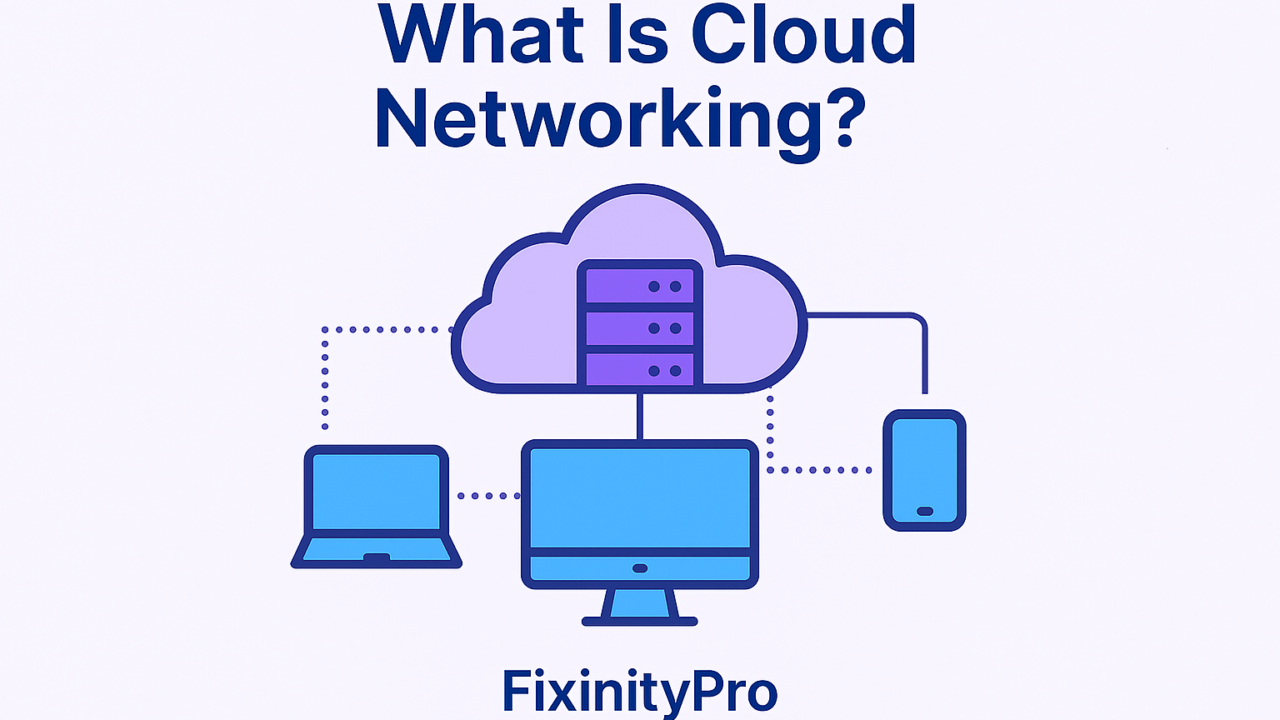
Cloud networking refers to the use of cloud-based services and infrastructure to build and manage network resources. Instead of relying on physical routers, switches, and cables, networking functions are hosted and delivered through the cloud.
Key Characteristics
- ✅ Virtualized network resources
- ✅ Scalable infrastructure
- ✅ Remote accessibility
- ✅ High availability and redundancy
How Cloud Networking Works
In traditional networks, all devices are connected through physical hardware in a specific location. In cloud networking:
- Network components are hosted in remote data centers
- Connectivity is managed via the internet
- Resources are allocated dynamically
👉 This allows users to access systems from anywhere in the world.
1. Virtual Networks (Core Component)
What Is a Virtual Network?
A virtual network (VNet) is a logical representation of a network created in the cloud. It behaves like a traditional network but exists entirely in a software-defined environment.
Key Features of Virtual Networks
- Private IP address ranges
- Subnets for segmentation
- Security groups and firewall rules
- Routing configuration
Example
In Microsoft Azure:
- You can create a VNet
- Define subnets (e.g., Web, Database, App)
- Control traffic between these segments
Benefits
- Improved security
- Flexible configuration
- Easy scalability
2. Cloud Infrastructure
What Is Cloud Infrastructure?
Cloud infrastructure includes all the components required to deliver cloud services, such as:
- Virtual machines (VMs)
- Storage systems
- Networking services
- Load balancers
Types of Cloud Infrastructure
Public Cloud
- Shared infrastructure (AWS, Azure, Google Cloud)
- Cost-effective and scalable
Private Cloud
- Dedicated infrastructure for one organization
- Higher control and security
Multi‑Cloud
- Using services from multiple providers
Advantages
- No need for physical hardware
- Reduced maintenance
- On-demand resource allocation
- High reliability
3. Hybrid Networks
What Is a Hybrid Network?
A hybrid network combines:
- On-premises infrastructure (local servers)
- Cloud-based resources
Why Use Hybrid Networking?
Many organizations are not ready to move everything to the cloud. Hybrid solutions allow gradual migration.
Example
A company may:
- Keep sensitive data on local servers
- Host applications in the cloud
Key Benefits
- Flexibility
- Improved data control
- Cost efficiency
- Business continuity
Cloud Networking vs Traditional Networking
| Feature | Traditional Networking | Cloud Networking |
|---|---|---|
| Infrastructure | Physical hardware | Virtual/cloud-based |
| Scalability | Limited | Highly scalable |
| Cost | High upfront cost | Pay-as-you-go |
| Accessibility | Local access | Global access |
| Maintenance | Manual | Managed by provider |
Benefits of Cloud Networking
1. Scalability
Easily scale resources up or down based on demand.
2. Cost Efficiency
- No hardware purchase
- Pay only for what you use
3. High Availability
Cloud providers ensure:
- Redundancy
- Backup systems
- Disaster recovery
4. Remote Access
Users can access systems from anywhere with internet connectivity.
Security in Cloud Networking
Common Risks
- Misconfigured networks
- Unauthorized access
- Data breaches
Best Practices
✅ Use strong authentication (MFA)
✅ Implement firewalls and security groups
✅ Encrypt data in transit and at rest
✅ Monitor network traffic
Use Cases of Cloud Networking
- Remote work environments
- Web hosting and applications
- Data backup and disaster recovery
- Enterprise IT infrastructure
Common Mistakes to Avoid
❌ Ignoring network security settings
❌ Misconfiguring virtual networks
❌ Not using segmentation (subnets)
❌ Relying on default configurations
✅ Proper planning is essential for success.
Future of Cloud Networking
Cloud networking continues to evolve with technologies such as:
- Software-defined networking (SDN)
- Edge computing
- AI-driven network management
👉 These innovations will make networks even more intelligent and automated.
Conclusion
Cloud networking is transforming how organizations design and manage their IT infrastructure. By leveraging virtual networks, flexible cloud infrastructure, and hybrid networking models, businesses can build scalable, secure, and efficient systems.
At FixinityPro, we recommend that IT professionals and beginners invest time in understanding cloud networking—it is a critical skill for modern IT careers.
👉 The future of networking is in the cloud. Start learning today to stay ahead.
FAQ
What is cloud networking in simple terms?
Cloud networking is the use of cloud-based infrastructure to manage network resources instead of physical hardware.
What is a virtual network?
A virtual network is a software-defined network that exists in the cloud.
What is the difference between cloud and traditional networking?
Cloud networking is scalable and virtual, while traditional networking relies on physical hardware.
What is a hybrid network?
A hybrid network combines on-premises and cloud infrastructure.
Is cloud networking secure?
Yes, when properly configured with security measures like encryption and access control.